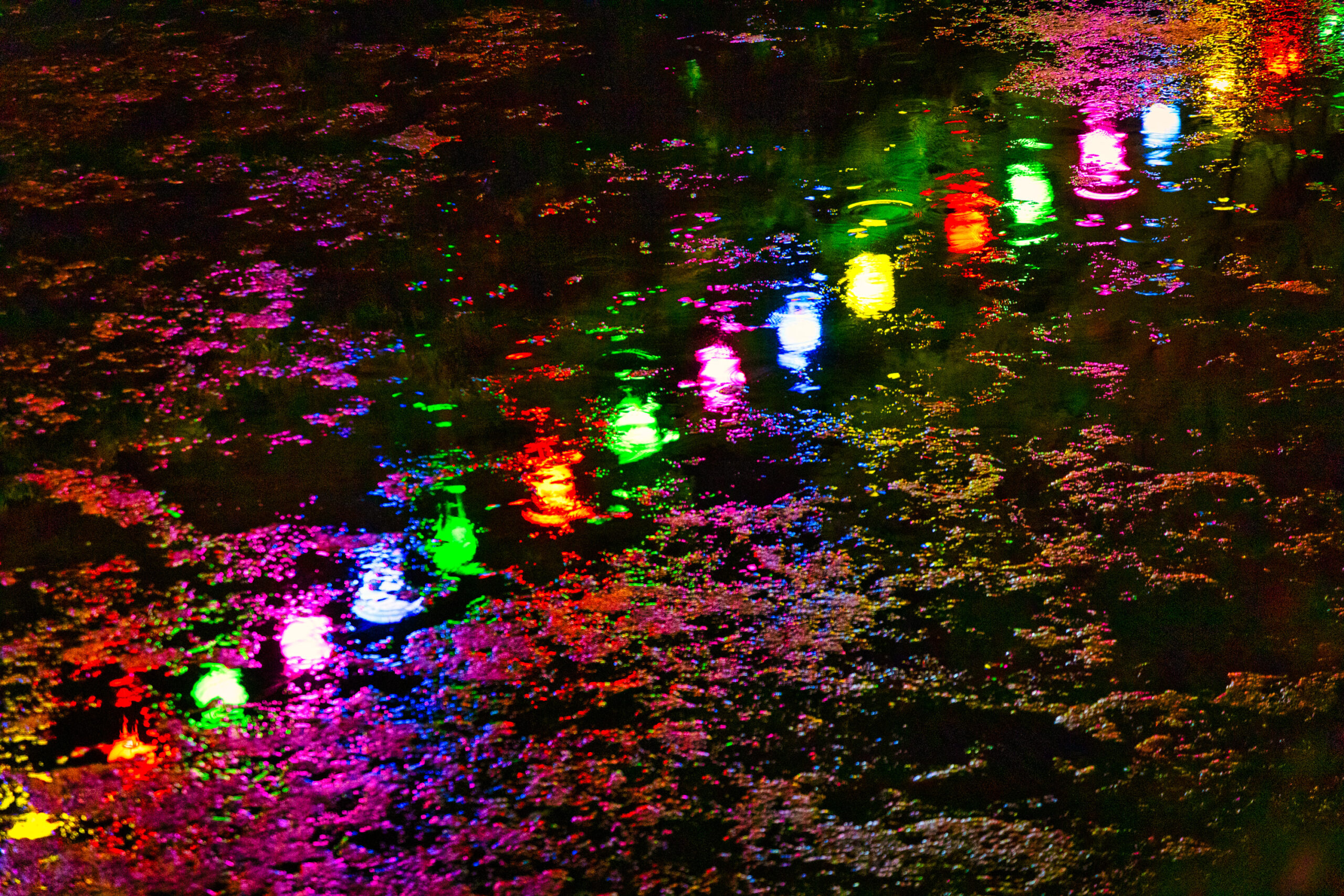
It’s that time of year again in Korea—the temples are dressed to the nines. Cloaked in rainbow lanterns and steeped in a kind of spiritual theatre that’s equal parts reverence and rock show. Lantern Festival season. And while the average person might head to the Instagramer/ Lantern inferno that is Samgwangsa in Busan, elbowing influencers out of the way for a grainy shot of the same view over the temple that everyone else has shot for the last decade, I took the road less chaotic.
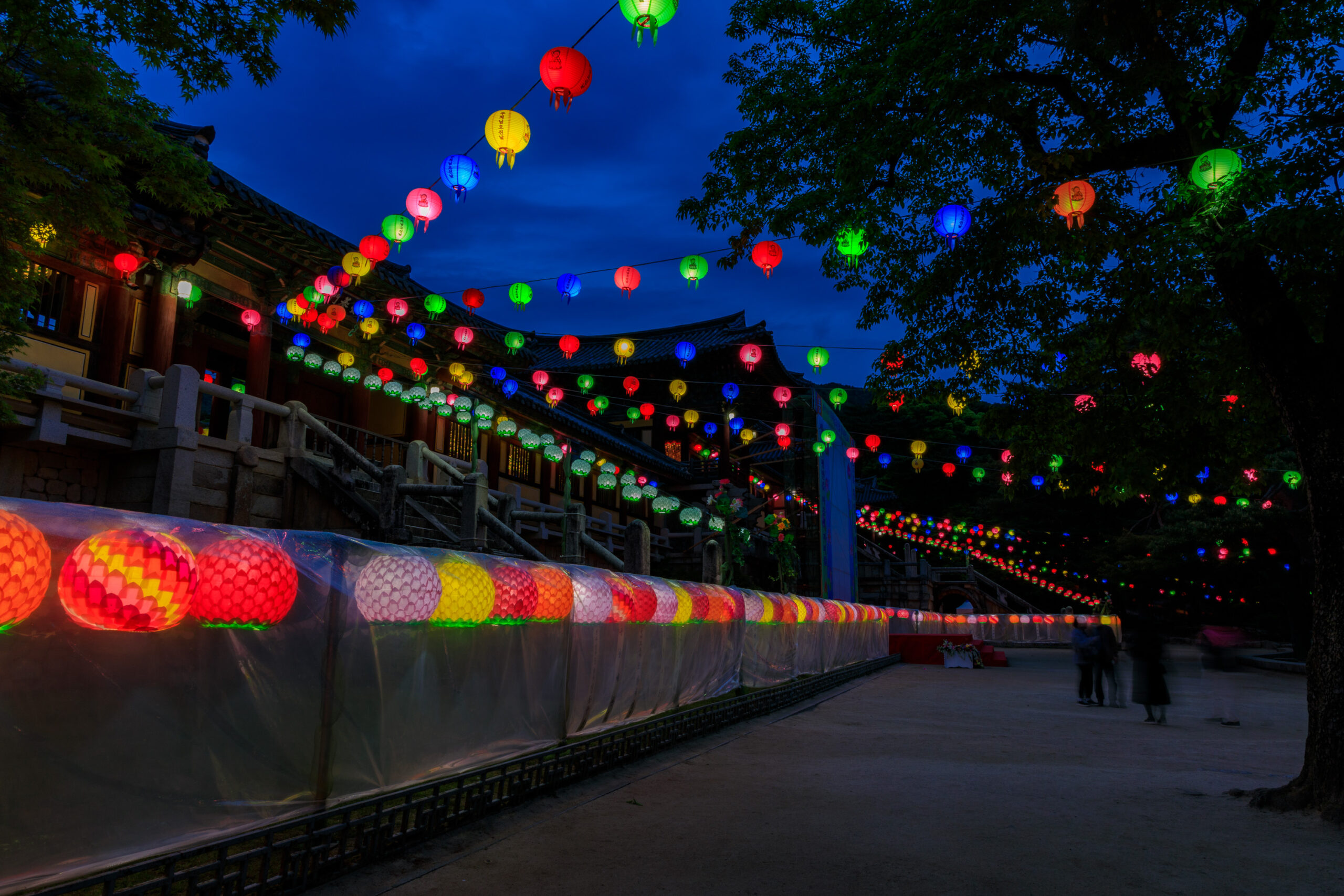
This year, it was Bulguksa or bust.
Yeah, THE Bulguksa. UNESCO World Heritage, 8th-century stone masterpiece, nestled on the edge of Gyeongju—a city that’s basically Korea’s open-air museum. I drive past the place most mornings on my way to work, like a guilty friend avoiding a visit they know they should make. This time, I went in.
It was the long weekend. Everyone else was off blowing their holiday pay in Jeju or heading abroad. That left the temple blessedly quiet. I got there late, dragging my middle-aged ass out the door in true “maybe I’ll just skip it” fashion. But just as I arrived, the bell rang out. That low, resonant bong that doesn’t just call monks to prayer—it calls your soul to attention.
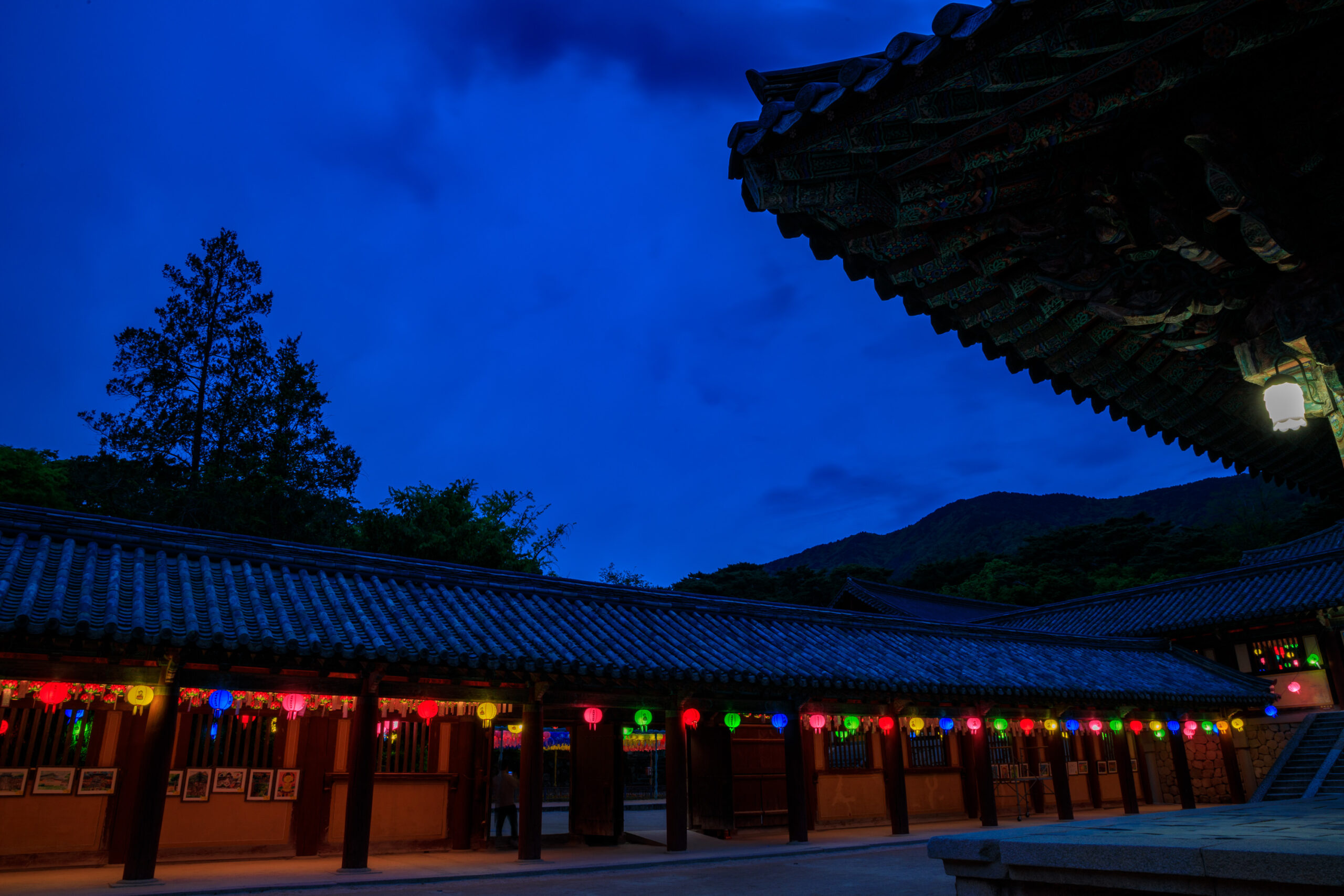
On this special night, admission was free. The doors were open late. Bulguksa was inviting everyone in, like an old friend saying, “Come on, the light’s still on. Sit a while.”
Let’s be real—blue hour is why I was there. Not golden hour, not the light that sunhat-wearing influencers fight over. No, I wanted the quiet drama. The rich tones. The way the lanterns start to hum against a cobalt sky. Overcast skies? Perfect. Who needs drama in the heavens when you’ve got it hanging from strings and wires?
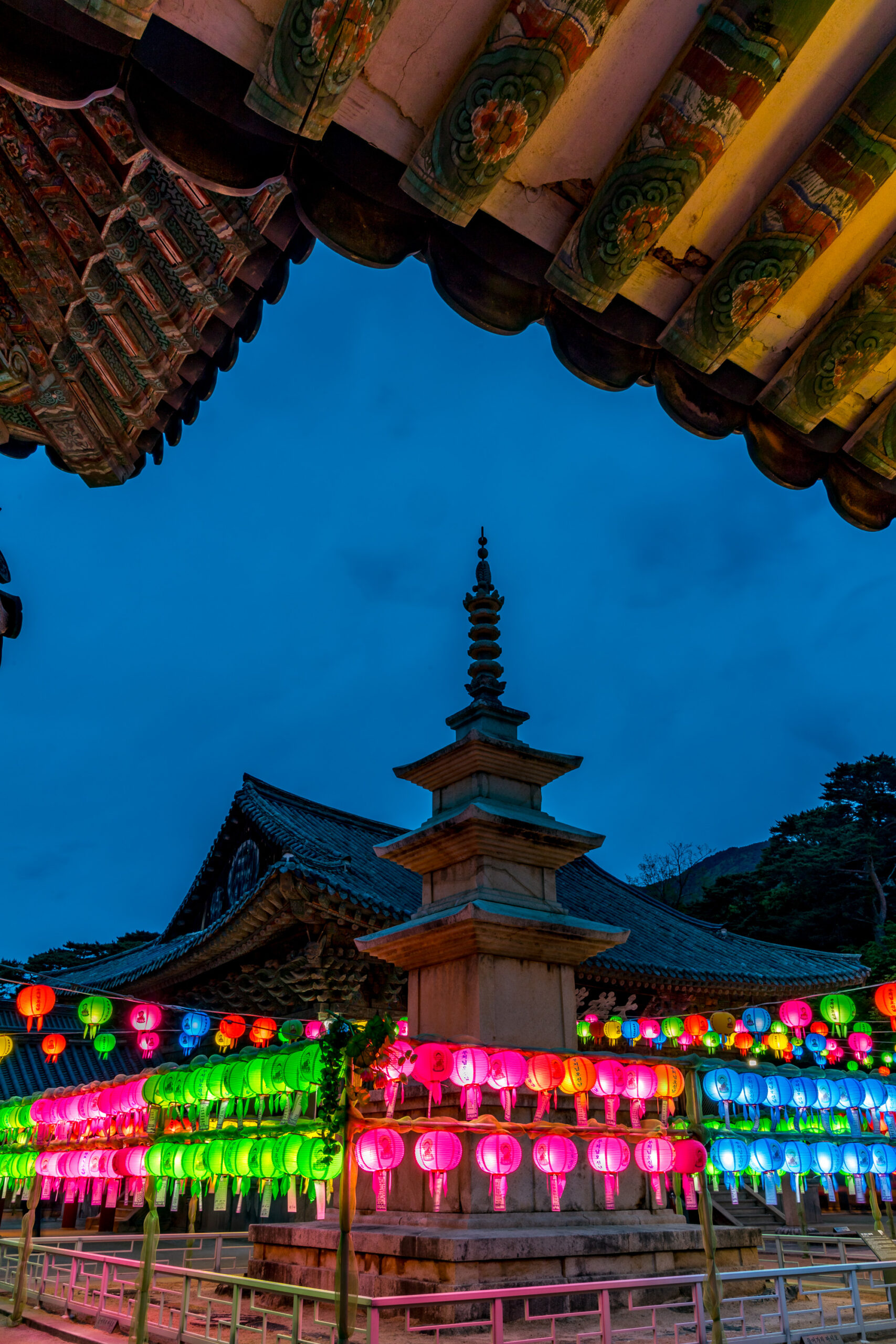
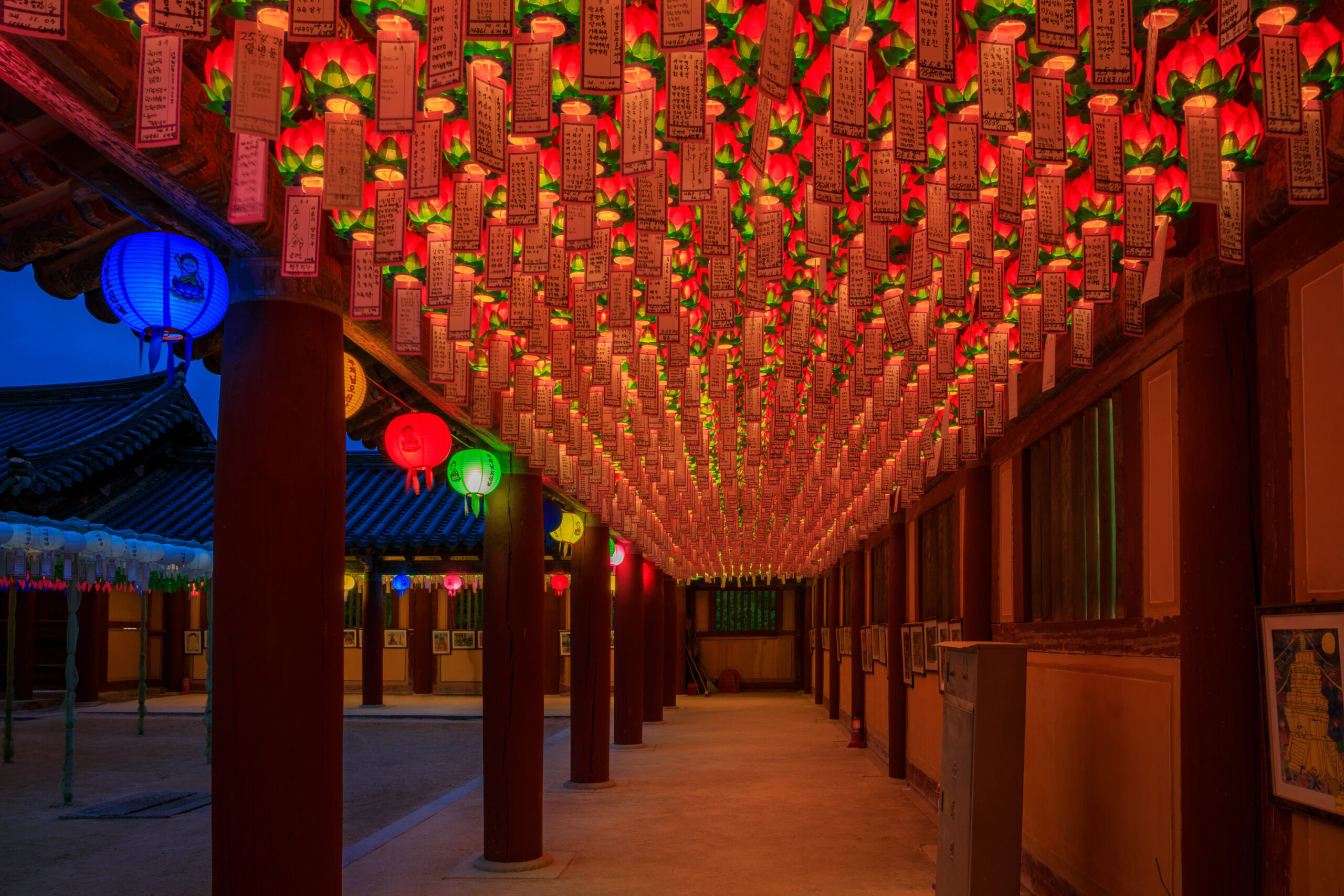
I got to the upper courtyard just before blue hour kicked in—enough time to scope angles, set up the tripod, and exhale. The temple grounds were veiled in a thousand glowing orbs, each lantern like a whispered prayer, a small hope lit for someone’s future. The wooden beams of Bulguksa soaked it all in—eight centuries of history glowing like embers.
Then I turned the corner, and there it was: Dabotap—the iconic stone pagoda—standing like it’s been holding court for centuries, which, well, it has. And beside it, Seokgatap, the yin to Dabotap’s yang. A group of people lingered between them, reverent, quiet, lit by the glow of their lanterns and the last gasp of daylight.
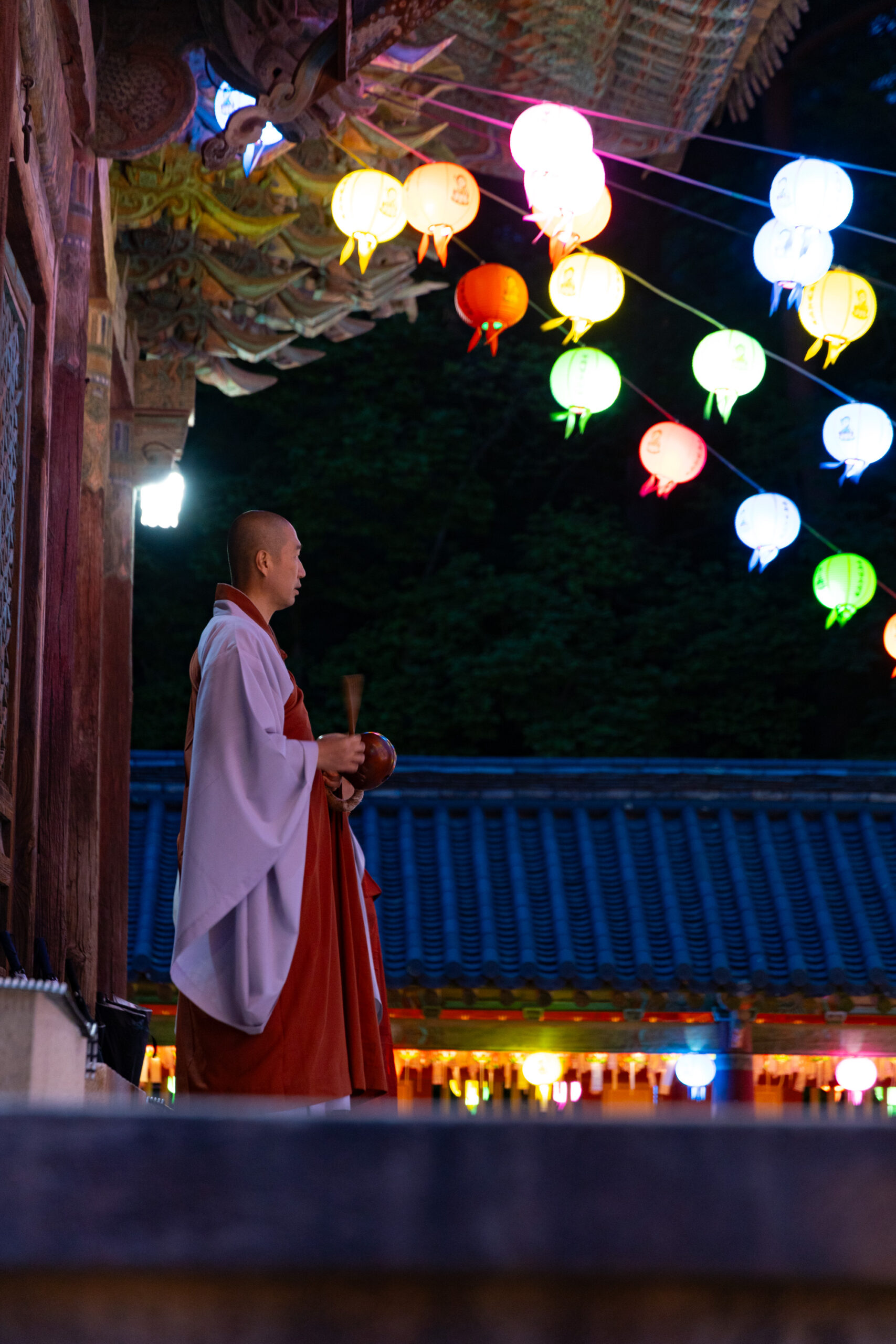
This is what most tourists miss. The silence between chants. The way a temple exhales when the crowds have thinned. I snapped away, working the shadows like a ghost, staying low, invisible, respectful. This wasn’t a shoot; this was a meditation.
Then came the procession.
A line of people following the monks, each holding a candlelit paper lantern, circling the grounds like a river of fireflies. The chanting drifted through the night air, wrapping around me like smoke. They stopped in front of the main hall. More chanting. A bow. And just like that, the night exhaled again.
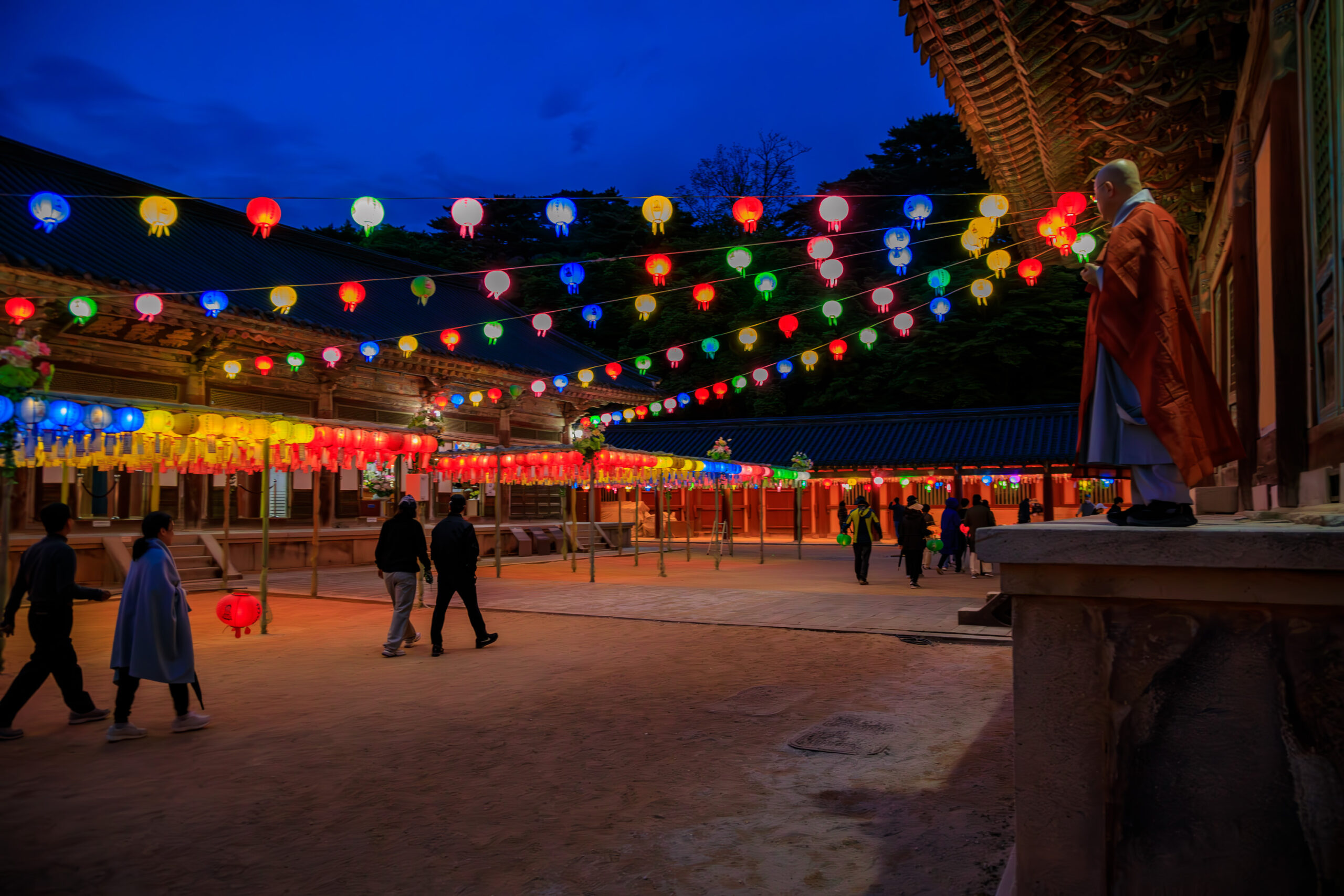
I lingered. A few last shots. The sky finally surrendered to night. Black as ink. And I stood there, a lone Canadian in the belly of ancient Korea, camera in hand, heart somewhere between past and present.
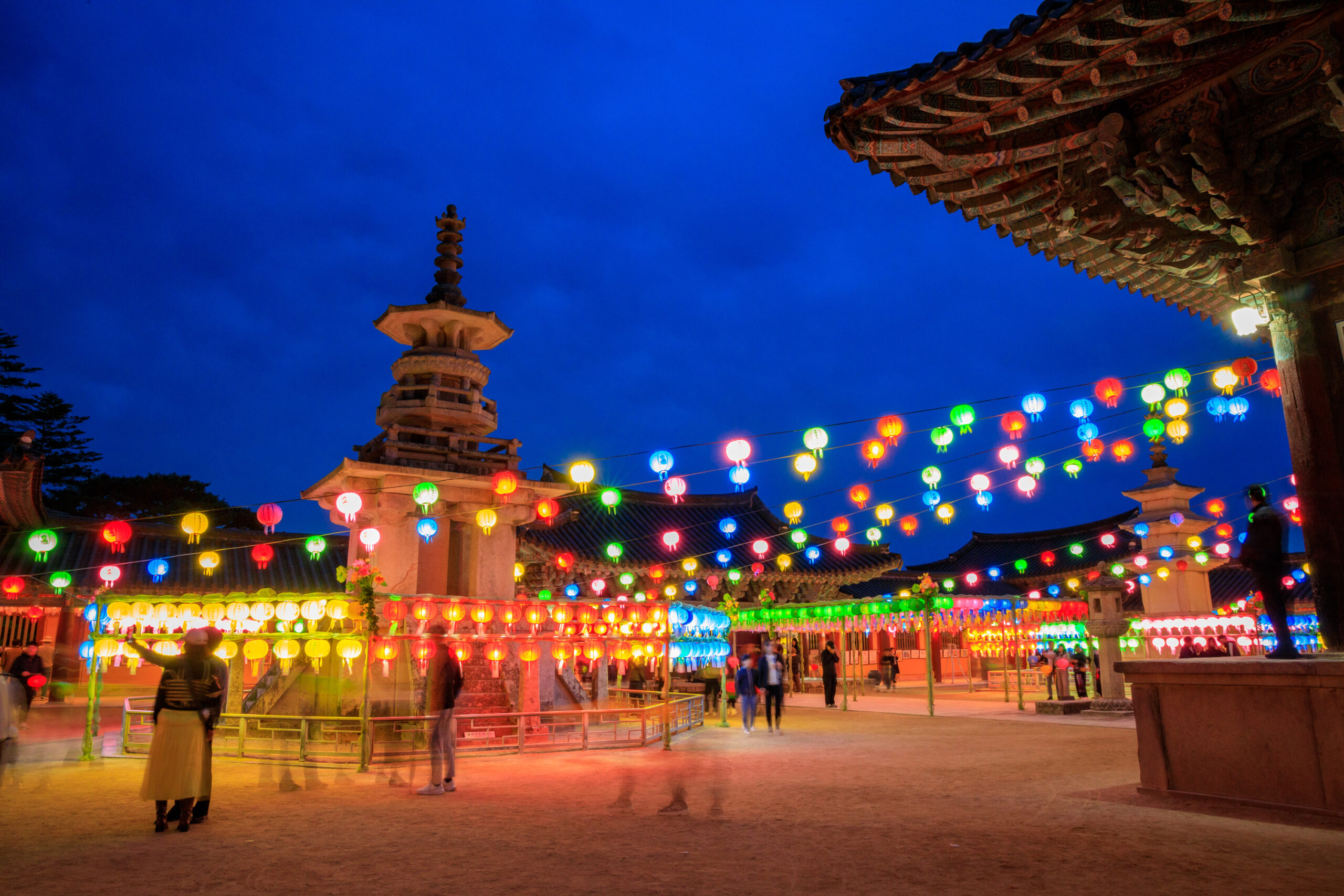
It’s moments like these that make me laugh. I mean, imagine this: some punk kid from the Canadian Prairies, raised on -40 degree winters and punk rock, now quietly documenting the kind of spiritual ceremony that once felt galaxies away. I threw on The Smalls for the ride home—because some ghosts are best brought along for the ride—and cruised back to Ulsan.
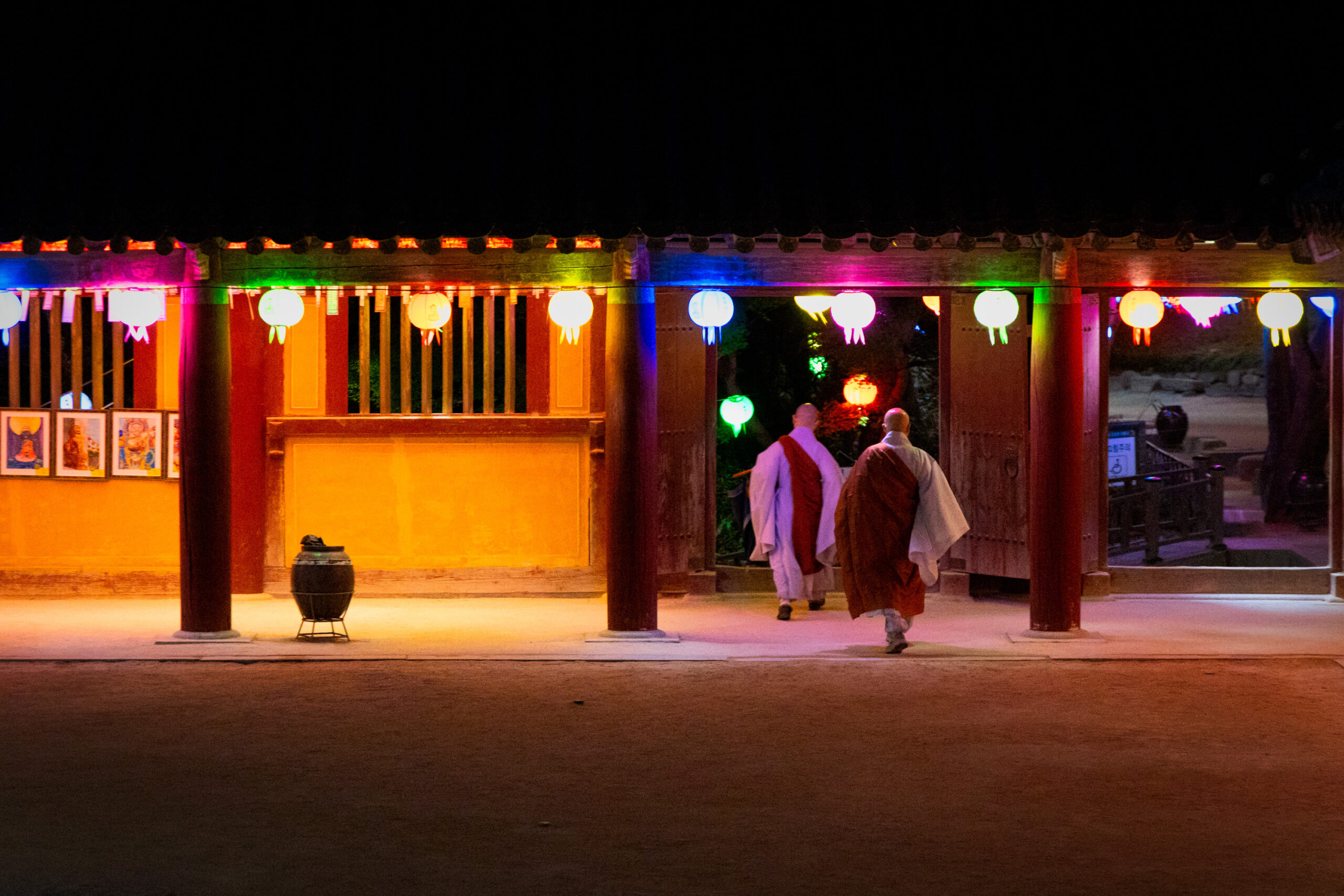
Miraculously, I even found a decent parking spot. Call it karma. Call it dumb luck. Or maybe, just maybe, the universe tossing me a bone for showing up, camera in hand, heart wide open.
Shooting Tips from the Field:
- Blue Hour (7:00–7:45 p.m.) is ideal at Bulguksa. The lanterns pop and you avoid harsh lighting.
- Bring a sturdy tripod—low light requires long exposures.
- Best vantage points: side of the main hall for symmetry between Dabotap and Seokgatap; stairway angles for depth.
- Arrive early if you want to scope shots and avoid the crowd during the monk-led procession.
- Overcast? Good. Rain? Even better. Wet stones = extra texture.
Peace, light, and the occasional punk rock detour—until the next shoot.